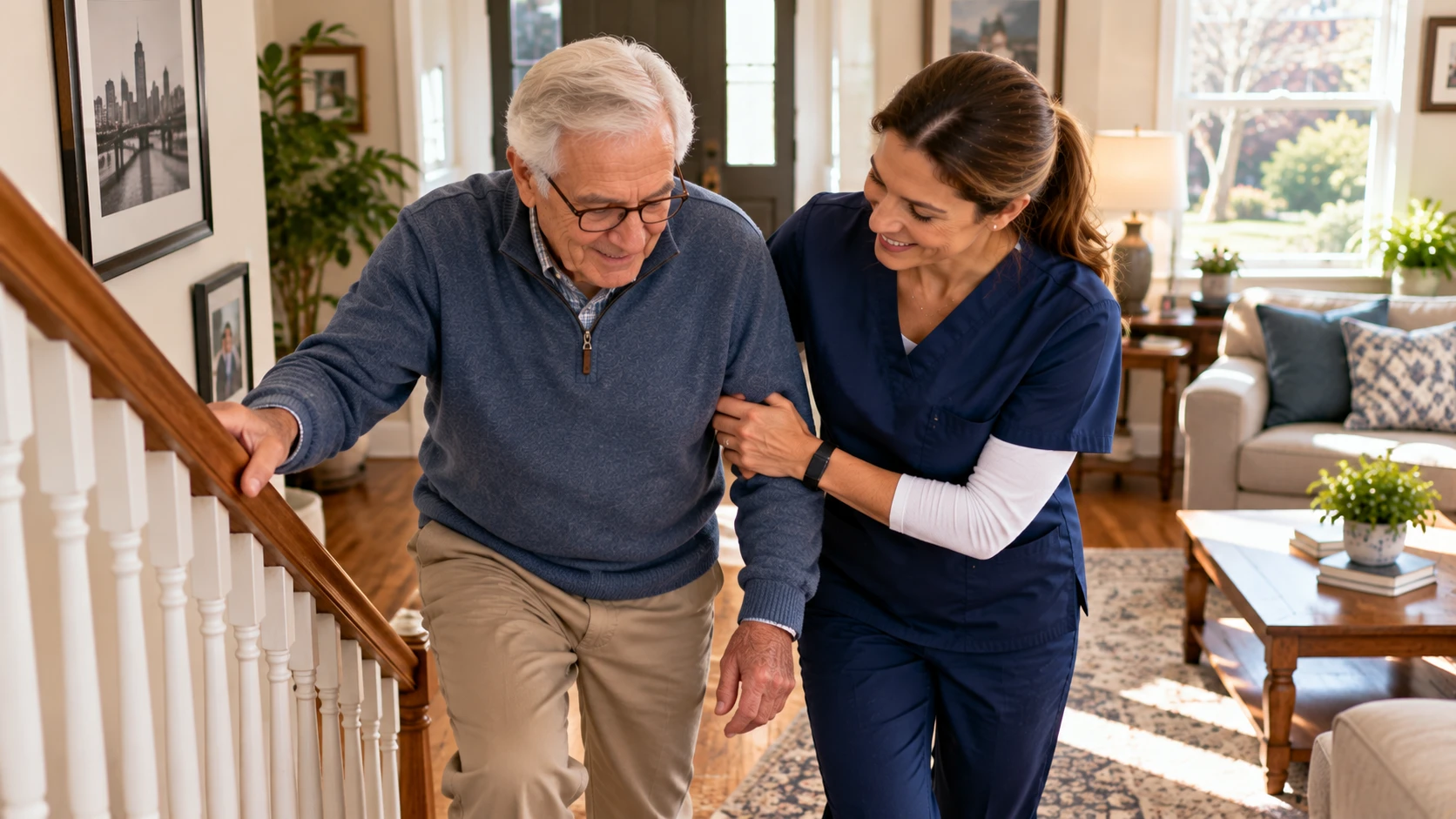
Fall prevention for seniors in Philadelphia starts with a safer home, regular movement, medication reviews and the right level of support. Key steps include installing grab bars and stair railings, improving lighting, removing throw rugs, wearing supportive shoes, getting vision checked and exercising for balance. In-home caregivers add hands-on help with bathing, stairs and walking, which lowers the risk of falls for older adults living at home.
Why Fall Prevention Matters for Philadelphia Seniors
Falls are the leading cause of injury among adults age 65 and older. The Centers for Disease Control and Prevention (CDC) reports that about one in four older adults falls each year, and falls send millions of seniors to emergency departments annually. Many result in hip fractures, head injuries and long hospital stays.
Even a fall without injury can change a senior's life. Fear of falling often causes older adults to move less, which weakens muscles and makes the next fall more likely.
Philadelphia seniors face added risks. Many live in older row homes with steep, narrow stairs, uneven floors and small bathrooms. Brick sidewalks, broken pavement and icy front steps in winter create hazards outside the home as well.
The good news is that most falls are preventable. A combination of home modifications, healthy habits and support from family and caregivers can dramatically reduce the risk.
What Causes Most Falls in Older Adults?
Falls usually result from several risk factors at once:
- Muscle weakness and poor balance
- Vision problems, including cataracts and glaucoma
- Medications that cause dizziness, drowsiness or low blood pressure, such as sedatives, sleep aids, some antidepressants and blood pressure medications
- Chronic conditions like arthritis, diabetes, Parkinson's disease and stroke
- Foot pain and unsafe footwear
- Dehydration and poor nutrition
- Cognitive decline and dementia
- Home hazards such as clutter, rugs, poor lighting and missing railings
- Rushing to the bathroom, especially at night
Addressing even a few of these factors makes a meaningful difference.
Room-by-Room Home Safety Checklist
Walk through your loved one's home with this checklist. Many fixes are simple and inexpensive.
Stairs and Steps
Stairs are one of the most dangerous places in a Philadelphia row home.
- Install sturdy handrails on both sides of every staircase, running the full length
- Add bright lighting with switches at both the top and bottom
- Fix loose or uneven steps and secure loose carpet
- Apply high-contrast tape to step edges so they are easy to see
- Keep stairs completely clear of shoes, laundry baskets and packages
- Consider a stair lift if climbing stairs has become difficult
- Repair cracked front steps and add a railing to the stoop
Bathroom
Wet surfaces and tight spaces make the bathroom a common site of falls.
- Install grab bars next to the toilet and inside the tub or shower
- Use non-slip mats inside the tub and a non-slip rug outside it
- Add a shower chair or tub transfer bench
- Use a handheld showerhead so seniors can bathe while seated
- Install a raised toilet seat or toilet safety frame
- Keep a night light on between the bedroom and bathroom
- Never use towel bars as grab bars, since they are not built to support body weight
Bedroom
- Place a lamp within easy reach of the bed
- Make sure the bed height lets your loved one sit with feet flat on the floor
- Keep a phone or medical alert device beside the bed
- Clear a wide path from the bed to the door and bathroom
- Consider a bedside commode for seniors who need frequent nighttime bathroom trips
Kitchen
- Move everyday dishes, food and cookware to waist-to-shoulder height
- Get rid of step stools and chairs used for reaching
- Wipe up spills immediately
- Use a sturdy chair or stool with arms for sitting while cooking
Living Room and Hallways
- Remove throw rugs or secure them with double-sided tape
- Move electrical and phone cords out of walkways
- Rearrange furniture to create clear, wide paths
- Choose sturdy chairs with arms that make standing easier
- Add bright, even lighting and replace burned-out bulbs promptly
Basement
Many Philadelphia homes have the laundry machines in the basement down a steep, narrow staircase.
- Add railings and bright lighting to basement stairs
- Consider moving laundry duties to a caregiver or family member
- Keep the basement floor dry and clear
Entryways and Outdoors
- Install bright exterior lighting by the front door
- Keep steps clear of snow, ice and leaves, and use salt or sand in winter
- Place a bench or shelf near the door to set down bags while unlocking it
- Repair uneven pavement near the home when possible
Healthy Habits That Prevent Falls
Home modifications are only part of the solution. These habits help seniors stay steady:
Stay active. Exercise that improves strength and balance, such as walking, tai chi and chair exercises, is one of the most effective ways to prevent falls. Many Philadelphia senior centers and recreation centers offer group classes.
Review medications. Ask a doctor or pharmacist to review all prescription and over-the-counter medications at least once a year to identify those that increase fall risk.
Check vision yearly. Updated glasses and treatment for cataracts improve depth perception and balance.
Wear supportive shoes. Choose shoes with firm, non-slip soles and a closed back. Avoid walking in socks, slippers without backs or bare feet.
Stand up slowly. Sitting on the edge of the bed for a moment before standing helps prevent dizziness.
Stay hydrated and eat well. Dehydration causes dizziness, and adequate protein, calcium and vitamin D support muscles and bones.
Use mobility aids correctly. A walker or cane should be properly fitted, ideally by a physical therapist.
Talk to the doctor about falls. Seniors should tell their doctor about any fall or near fall. The CDC's STEADI program helps health care providers screen for fall risk.
How In-Home Care Helps Prevent Falls
For many seniors, the safest home is one with a caregiver present during the riskiest moments of the day. Experienced caregivers help prevent falls by:
- Providing standby or hands-on help during bathing and showering
- Assisting on stairs and during transfers from bed, chair and toilet
- Helping with nighttime bathroom trips through overnight care
- Keeping walkways clean and clutter free
- Encouraging daily walking and exercises recommended by a therapist
- Giving medication reminders and noticing side effects like dizziness
- Preparing nutritious meals and encouraging fluids
- Handling high-risk chores such as laundry in the basement, reaching high shelves and taking out trash in winter
- Noticing changes in balance, strength or confusion and alerting the family
What to Do If an Elderly Loved One Falls
- Stay calm and check for injuries before helping them move.
- If they are hurt, cannot get up, hit their head or take blood thinners, call 911.
- If uninjured, help them roll to their side, get to hands and knees, and use a sturdy chair to rise slowly.
- Tell their doctor about the fall, even if they seem fine.
- Look for what caused the fall and fix it.
- Consider adding in-home care or increasing care hours.
Fall Prevention Support From Visiting Care Home Care Services
Visiting Care Home Care Services helps Philadelphia seniors stay safe and steady at home. Our experienced caregivers assist with bathing, mobility, stairs, transfers, meals, medication reminders, housekeeping and companionship, with care available a few hours a week, overnight or 24 hours a day, 7 days a week.
We serve families throughout Philadelphia, including Center City, South Philadelphia, Northeast Philadelphia, Roxborough, Manayunk, West Philadelphia and Chestnut Hill, as well as nearby Delaware, Montgomery and Bucks counties.
We accept all major credit cards, retirement funds, long-term care insurance and ACH payments.
Worried about a loved one falling at home? Contact Visiting Care Home Care Services at visitingcareservice.com to schedule an in-home care consultation.