To make a Philadelphia home safer for an aging parent, focus on fall prevention first. Add bathroom grab bars, handrails on both sides of stairs, bright lighting, and nonslip flooring, and remove clutter and loose rugs. Row homes with steep stairs may need a first floor bedroom or stair lift. In home caregivers, companion care, and post hospital support help seniors age in place safely.
Why Home Safety Matters for Aging Parents in Philadelphia
Most older adults want to stay in their own homes as they age. Aging in place keeps them connected to their neighbors, church, corner store, and memories. But a home that worked well at 50 can become risky at 80.
Falls are the biggest danger. According to the Centers for Disease Control and Prevention (CDC), about one in four adults age 65 and older falls each year, and falls are a leading cause of injury for older Americans. A single fall can lead to a hip fracture, a hospital stay, and a loss of independence.
Many Philadelphia homes create extra challenges. Classic row homes in neighborhoods like South Philadelphia, Kensington, Germantown, Olney, and Port Richmond often have steep, narrow stairs, a single bathroom on the second floor, front stoops without railings, and laundry in the basement. Older twins and single homes in Delaware County and Montgomery County may have similar layouts. The good news is that most safety fixes are simple and affordable.
Room by Room Home Safety Checklist for Seniors
Use this senior home safety checklist to walk through your parent's home.
Entrance and front steps
- Install sturdy handrails on both sides of the front steps or stoop.
- Add bright outdoor lighting or motion sensor lights.
- Use nonslip treads on outdoor steps.
- Keep salt or ice melt by the door for Philadelphia winters.
- Place a bench or table inside the door for setting down bags.
- Consider a ramp if your parent uses a walker or wheelchair.
Stairs
- Install handrails on both sides of every staircase, including the basement stairs.
- Make sure every step is in good repair with no loose carpet or boards.
- Add light switches at the top and bottom of the stairs.
- Mark the edge of each step with contrasting tape if eyesight is poor.
- Never store items on the stairs.
- Consider a stair lift if climbing stairs is unsafe.
Bathroom
- Install grab bars next to the toilet and inside the tub or shower. Towel bars are not strong enough to hold weight.
- Use a nonslip mat inside the tub and a nonslip rug outside it.
- Add a shower chair or tub transfer bench.
- Install a handheld shower head.
- Use a raised toilet seat or toilet safety frame.
- Set the water heater to 120 degrees Fahrenheit or lower to prevent burns.
- Add a night light between the bedroom and bathroom.
Bedroom
- Keep a lamp, phone, glasses, and water within reach of the bed.
- Make sure the bed is at a height where feet touch the floor when sitting.
- Clear a wide, straight path from the bed to the door and bathroom.
- Use night lights for nighttime bathroom trips.
- Consider moving the bedroom to the first floor if stairs are a concern.
Kitchen
- Move everyday dishes, pots, and food to shelves between waist and shoulder height.
- Remove step stools and never use a chair to reach high shelves.
- Use appliances with automatic shut off features.
- Keep a fire extinguisher in the kitchen.
- Clean up spills right away.
Living areas
- Remove throw rugs or secure them with double sided tape.
- Tuck away electrical cords and phone chargers.
- Arrange furniture to create wide, clear walkways.
- Use sturdy chairs with arms that make standing easier.
- Keep pets' toys and bowls out of walking paths.
Basement and laundry
- Add a handrail and bright lighting on basement stairs.
- Consider moving the washer and dryer to the first floor if possible.
- Use a smaller laundry basket or a caregiver's help carrying loads.
What Home Modifications Help Seniors Age in Place?
Some home modifications require a contractor, while others are easy weekend projects.
- Low cost updates: Night lights, nonslip mats, shower chairs, raised toilet seats, lever door handles, brighter light bulbs, and removing rugs.
- Moderate updates: Grab bars, second handrails, a handheld shower, motion sensor lighting, and outdoor railings.
- Larger projects: Stair lifts, walk in showers, first floor bathrooms, widened doorways, and exterior ramps.
An occupational therapist can perform a home safety evaluation and recommend changes based on your parent's specific health needs. Ask your parent's doctor for a referral.
Are There Programs That Help Pay for Home Modifications in Philadelphia?
Yes. Philadelphia offers programs that help older adults and people with disabilities make their homes safer:
- Senior Housing Assistance Repair Program (SHARP): Run by the Philadelphia Corporation for Aging (PCA), SHARP provides minor repairs and modifications, such as grab bars, railings, and repaired basement steps, for income eligible homeowners age 60 and older. Call the PCA Helpline at 215.765.9040.
- Adaptive Modifications Program (AMP): Administered by the Philadelphia Housing Development Corporation (PHDC), AMP helps income eligible Philadelphia residents with permanent physical disabilities with modifications such as railings, ramps, stair lifts, and bathroom changes. Homeowners and renters with landlord permission may apply.
- Basic Systems Repair Program (BSRP): Also run by PHDC, BSRP provides repairs to electrical, plumbing, heating, and roofing systems for income eligible homeowners.
In Bucks, Montgomery, Delaware, Chester, and Lancaster Counties, contact your county Area Agency on Aging to learn about local home repair and modification programs. Many programs have waiting lists, so apply early.
How to Prevent Falls Beyond Home Changes
Home modifications are only one part of fall prevention. Help your parent reduce fall risk by:
- Staying active: Strength and balance exercises, such as tai chi or the Pennsylvania Department of Aging's Healthy Steps programs, improve stability.
- Reviewing medications: Ask the doctor or pharmacist whether any medications cause dizziness or drowsiness.
- Checking vision: Schedule a yearly eye exam and update glasses.
- Wearing safe shoes: Choose closed, nonslip shoes instead of socks or loose slippers.
- Using mobility aids correctly: Make sure canes and walkers are fitted to the right height.
- Getting up slowly: Sit on the edge of the bed for a moment before standing.
For more healthy routines, read our guide to 5 daily habits that help seniors stay healthy at home.
Fire, Heat, and Emergency Safety for Seniors
Home safety also means preparing for emergencies:
- Install smoke alarms on every level and carbon monoxide detectors near bedrooms. Philadelphia residents can call 311 to ask about free smoke alarm installation from the Philadelphia Fire Department.
- Test alarms monthly and replace batteries yearly.
- Keep a current list of medications, doctors, and emergency contacts on the refrigerator.
- Consider a personal emergency response system or medical alert button.
- Plan for extreme heat. Philadelphia summers can be dangerous for older adults, so make sure your parent has a working air conditioner or fan and knows where cooling centers are.
- Keep walkways clear of snow and ice in winter.
How Can a Home Caregiver Make the Home Safer?
Even the safest home cannot replace a helping hand. An experienced home caregiver adds a layer of safety every day by:
- Providing standby help during showers and bathing.
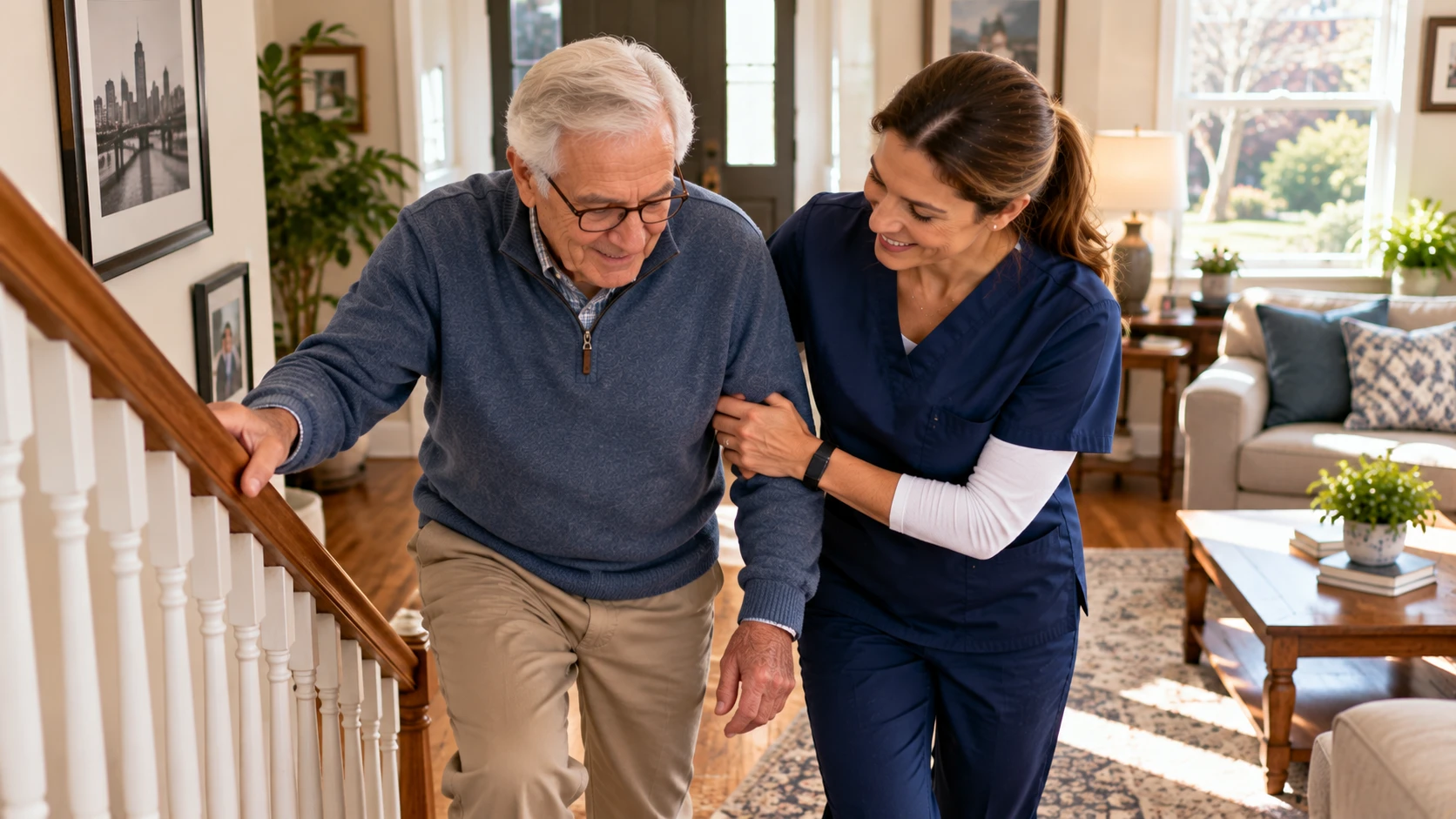
- Helping your parent up and down stairs.
- Keeping floors clear and the home tidy.
- Carrying laundry and groceries.
- Offering medication reminders.
- Preparing meals so your parent does not have to reach, lift, or stand too long.
- Noticing new hazards and changes in balance, memory, or strength.
- Reporting concerns to the family right away.
Visiting Care Home Care Services helps seniors age in place safely across Philadelphia, Bucks County, Montgomery County, Delaware County, Chester County, and Lancaster County. Families can choose hourly, overnight, or 24 hour home care based on fall risk and daily needs.
Signs Your Parent's Home Is No Longer Safe Without Help
Watch for these warning signs during visits:
- A recent fall or near fall.
- Bruises your parent cannot explain.
- Difficulty climbing stairs or getting out of a chair.
- Spoiled food, missed meals, or weight loss.
- Missed medications or confusion about doses.
- Scorched pots or appliances left on.
- A cluttered or unclean home that used to be tidy.
If you notice these signs, it may be time to add home care. Our Philadelphia in home care cost guide explains rates and payment options.
Frequently Asked Questions About Home Safety for Seniors
Help Your Parent Age in Place Safely
A safe home and a trusted caregiver can help your parent stay independent longer. Book an appointment with Visiting Care Home Care Services to learn how home care supports aging in place in Philadelphia, Bucks, Montgomery, Delaware, Chester, and Lancaster Counties.